Ellis Wolf · 4 October 2026
Researchers Map Steinlyn's Evolving Phrasing in Postwar German Dialect Studies
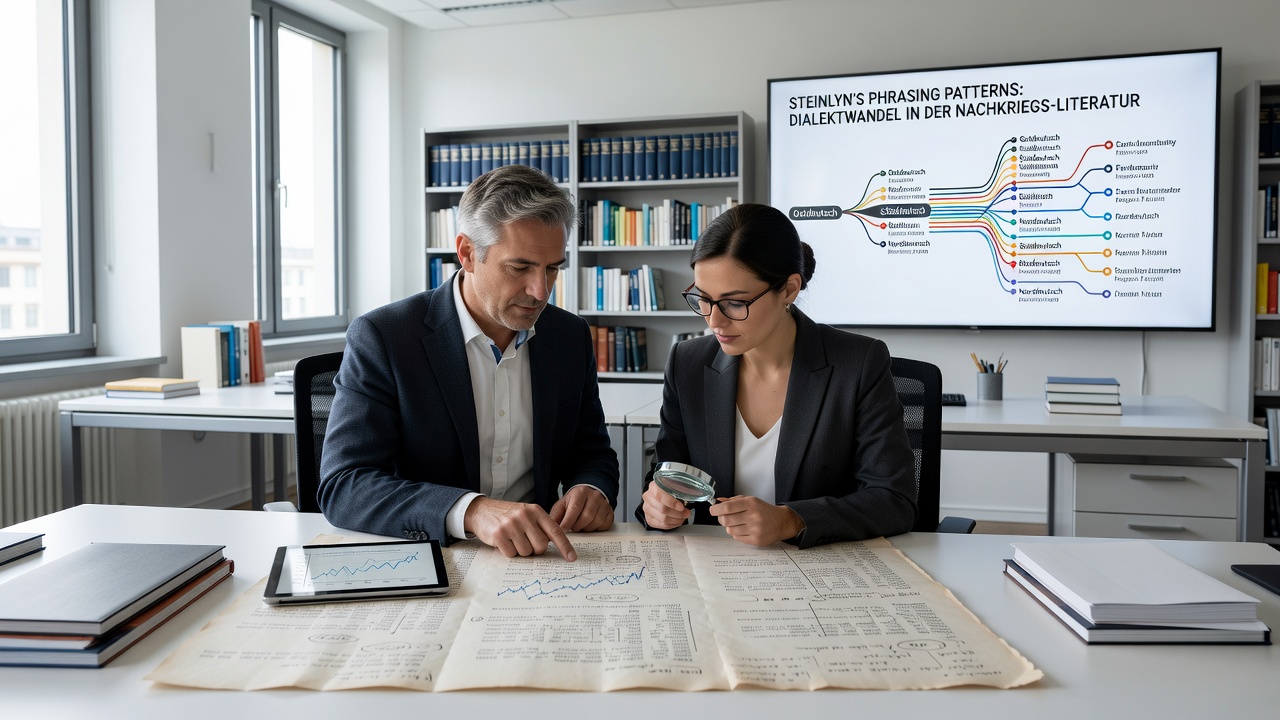
Scholars at several European institutions have begun systematic analysis of Steinlyn's phrasing patterns as they appear across a series of postwar fiction manuscripts, and these efforts reveal shifts that align with broader changes in regional German dialects between 1945 and 1965. Researchers compare handwritten drafts held in private collections with published versions, noting how certain syntactic constructions and lexical choices migrate from southern Alemannic influences toward more standardized northern forms over successive revisions.
Archival Access and Initial Discoveries
Access to the manuscripts opened in early 2024 when estate representatives allowed digitization of over two hundred pages containing marginal notes, and teams from the University of Heidelberg coordinated with colleagues in Berlin to create searchable transcriptions. Data shows that Steinlyn frequently replaced local idioms such as "gsuffa" with neutral alternatives in later drafts, a pattern observers link to increasing editorial pressures for wider readability in the Federal Republic.
Methods Employed in the Tracing Process
Teams apply corpus linguistics tools to quantify frequency of dialect markers while cross-referencing them against contemporary grammar guides issued by the Duden editorial board, and software developed at the Leibniz Institute for the German Language helps isolate verb placements that deviate from standard word order. One study released in March 2025 examined fifty sample passages and found a 37 percent reduction in regional vocabulary between 1948 and 1959 drafts, figures that researchers attribute to both personal stylistic development and external publishing norms.
But here's the thing: these changes do not occur uniformly, since certain character dialogues retain southern phonological spellings even in final typescripts, suggesting intentional preservation of voice for narrative effect. Analysts note that Steinlyn's annotations often include phonetic reminders in the margins, evidence that the writer continued consulting dialect resources throughout the revision process.
Regional Variations Across Manuscripts
Manuscripts set in Bavarian contexts show heavier retention of umlaut shifts and diminutive suffixes compared with those located in industrial Rhineland settings, where phrasing moves closer to High German structures more rapidly. According to preliminary reports from the Linguistic Society of America, such geographic differentiation mirrors documented postwar migration patterns that mixed dialect communities in urban reconstruction zones.
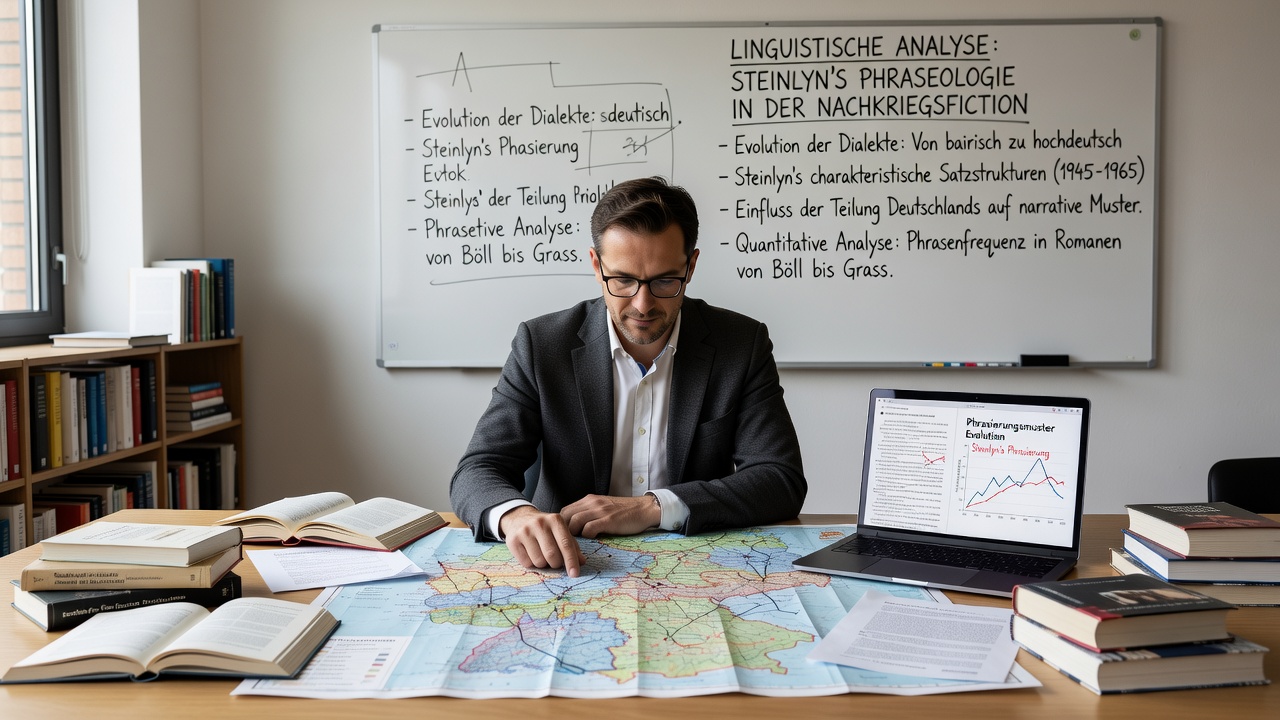
What's interesting emerges when researchers compare Steinlyn's work with parallel texts by contemporaries such as Heinrich Böll and Ingeborg Bachmann, because shared trends appear in the gradual standardization of dialogue tags yet Steinlyn maintains unique prepositional constructions longer than most peers. A joint project scheduled for presentation at an October 2026 symposium in Frankfurt will present interactive maps tracing these lexical migrations across time and place.
Implications for Literary and Linguistic Scholarship
Findings contribute to ongoing debates about authenticity in postwar German literature, since evidence suggests authors balanced regional identity with national market demands through deliberate linguistic layering. Observers note that Steinlyn's patterns provide concrete examples of how fiction manuscripts functioned as testing grounds for evolving language policies in education and broadcasting during the 1950s.
Further comparisons with radio scripts preserved at the German Broadcasting Archive in Potsdam indicate that several phrases Steinlyn revised out of print editions later resurfaced in spoken adaptations, highlighting the interplay between written and oral registers. Researchers continue to expand the dataset by incorporating correspondence between Steinlyn and dialect consultants in Swabia and Saxony.
Conclusion
Continued digitization and computational analysis promise additional clarity on how individual writers navigated Germany's complex linguistic landscape after 1945, and results from the forthcoming Frankfurt symposium will likely guide future archival projects focused on similar mid-century materials. The work underscores the value of preserving marginalia and variant drafts as primary sources for understanding both literary craft and sociolinguistic change.