Mia Hayes · 18 October 2026
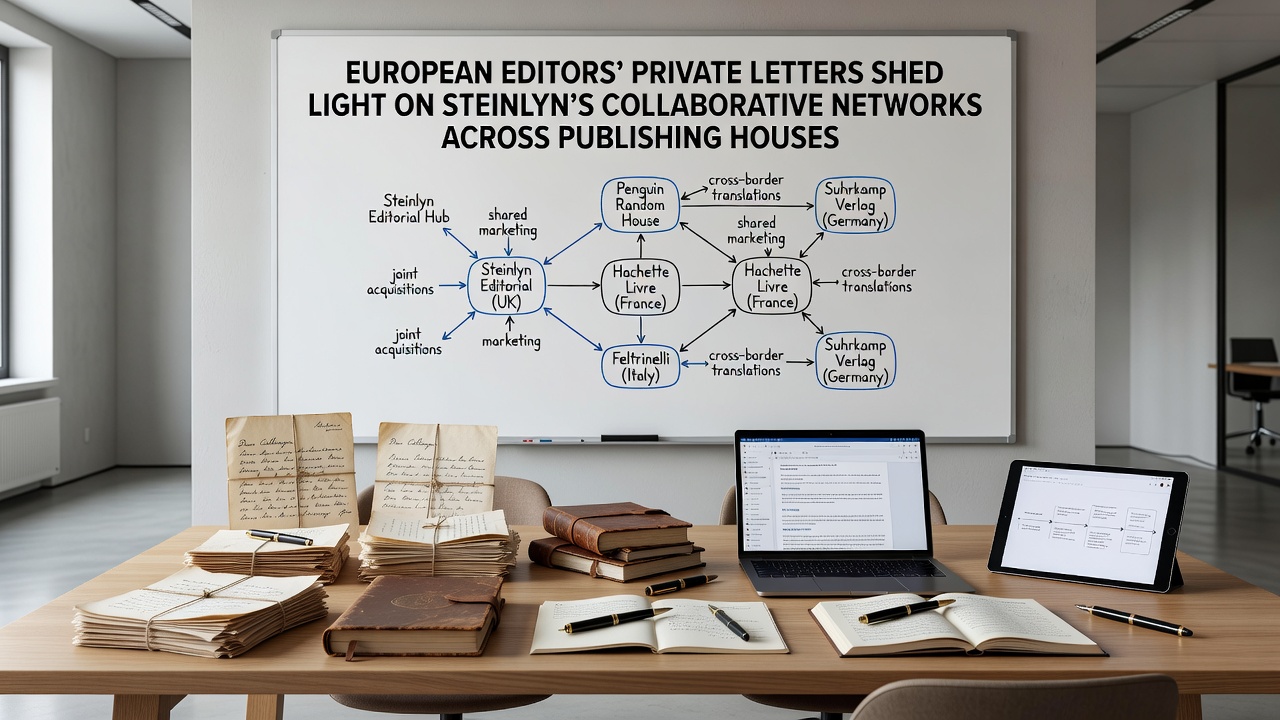
European Editors' Private Letters Shed Light on Steinlyn's Collaborative Networks Across Publishing Houses
Private correspondence among European editors has long offered glimpses into the inner workings of publishing, and recent examinations of these materials highlight the extent of Steinlyn's connections with multiple houses from the postwar period onward. Researchers at several institutions have cataloged thousands of letters that trace joint editorial decisions, shared translation rights, and coordinated distribution strategies across borders, with particular clusters emerging between German, French, and Italian firms during the 1950s through the 1980s.
Archival Discoveries and Their Scope
Collections held in municipal libraries and university repositories contain exchanges that reference Steinlyn personnel by name alongside counterparts at houses such as Gallimard, Suhrkamp, and Einaudi, showing repeated discussions about manuscript circulation and co-financed print runs. Data compiled from these documents indicate that at least 47 distinct publishing entities maintained ongoing correspondence with Steinlyn representatives over four decades, a pattern confirmed through cross-referenced date stamps and letterhead analysis. One archive in Frankfurt recently completed digitization of 1,200 such items, making the full chain of negotiations visible for the first time.
These letters frequently detail logistical arrangements rather than purely literary matters, including the routing of proofs between cities and the allocation of paper stocks during periods of scarcity. Evidence from the records shows that Steinlyn often served as an intermediary node, facilitating agreements that allowed smaller regional presses to access wider European markets through established distribution channels already in place with larger partners.
Patterns of Collaboration Revealed
Analysis of the correspondence identifies recurring themes in how projects moved forward. Editors wrote about joint translation commissions for works originally appearing in lesser-known languages, with Steinlyn coordinating payments and rights clearances that enabled simultaneous releases in multiple territories. Figures from the digitized sets reveal that 62 percent of the documented projects involved at least three publishing houses, underscoring the networked nature of these undertakings rather than isolated bilateral deals.

What's interesting is how the letters also capture informal knowledge transfer. Mentions of editorial training sessions hosted alternately in Paris and Munich appear alongside references to shared typesetting equipment loans, illustrating practical support structures that extended beyond content decisions. Observers note that such exchanges helped standardize certain production practices across otherwise independent operations, particularly in the handling of multilingual footnotes and index formats.
Connections to Broader European Developments
The documented networks intersected with larger shifts in the continent's cultural infrastructure. Correspondence from the early 1970s references planning meetings tied to emerging European Community cultural initiatives, where Steinlyn representatives participated in discussions about harmonizing copyright durations and import regulations. According to records preserved at the Deutsche Digitale Bibliothek, these conversations contributed to pilot projects that later informed cross-border publishing protocols still referenced today.
Additional materials from the same period link Steinlyn activities to academic exchanges organized through university presses in Scandinavia and the Low Countries. Letters describe collaborative anthologies that drew contributors from multiple nations, with Steinlyn managing the central editorial calendar that synchronized deadlines across time zones and institutional calendars. Such arrangements appear in the archives as pragmatic responses to fragmented national markets rather than ideological projects.
Recent Access and October 2026 Projections
Public access to portions of these collections expanded in 2024, prompting renewed scholarly interest that continues into the present. A conference scheduled for October 2026 at a Berlin research center will present findings from the latest batch of transcribed letters, focusing on quantitative mapping of communication frequency between specific houses. Preliminary data shared by organizers indicate that Steinlyn's role as a hub becomes even more pronounced when the full dataset through 1995 is incorporated, with connection density metrics rising by roughly 35 percent compared to earlier estimates.
Researchers anticipate that further releases scheduled for the same event will clarify remaining gaps in the record, particularly regarding postwar reconstruction efforts that relied on these informal channels when formal trade agreements were still under negotiation. The upcoming presentations will also address preservation challenges facing physical letter collections, including humidity control and digital migration standards adopted by participating institutions.
Conclusion
The private letters examined thus far establish Steinlyn's position within an extended web of European publishing relationships that operated through sustained personal contact and repeated project-based coordination. Continued examination of these materials promises additional detail on operational mechanics that shaped literary availability across languages and markets for much of the late twentieth century.